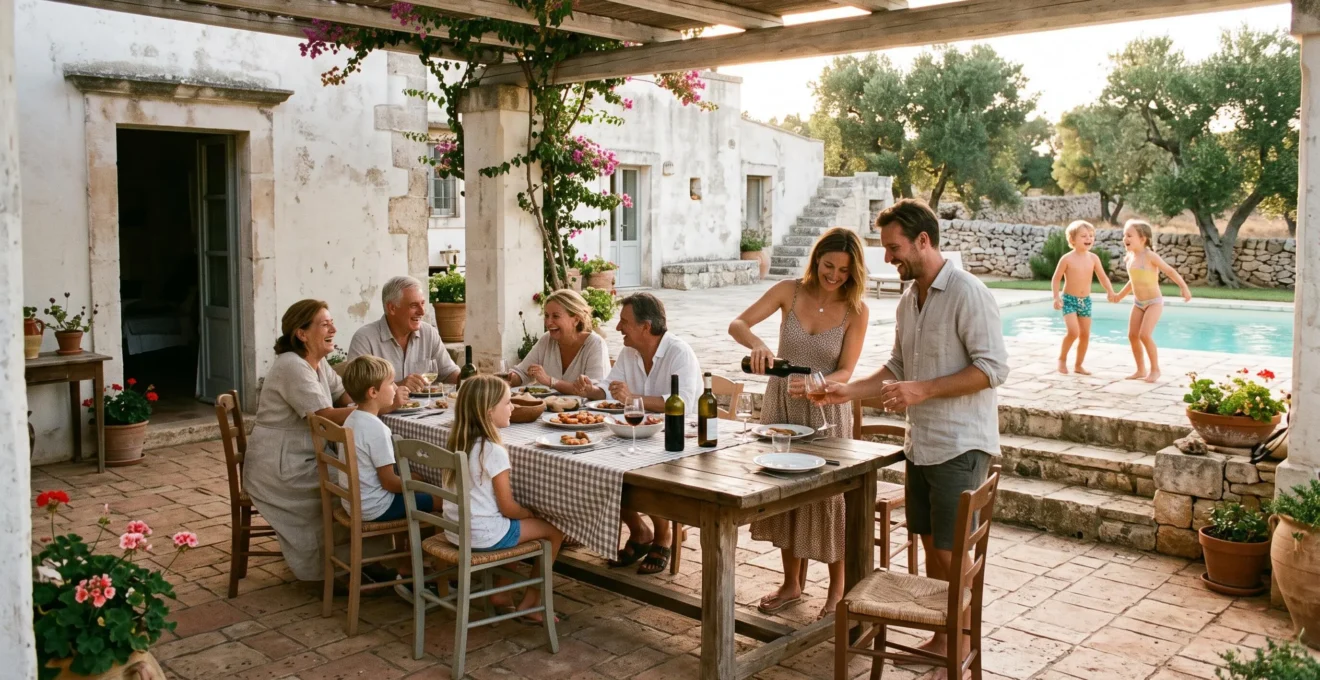
Direct answer: A villa holiday can be a great fit for a multigenerational family trip because it combines shared living spaces (for meals and time together) with real privacy (separate bedrooms, sometimes separate wings), and it lets you split one group budget across households instead of multiplying hotel rooms. The catch is that it only works if the villa’s layout, accessibility, and total fees truly match your group and destination.
If you’re organising the trip, you’re probably trying to solve three problems at once: keep everyone comfortable, make it easy to spend time together, and keep the cost fair between households. That’s exactly where a villa rental can shine—provided you verify the details before you book.
Demand for multigenerational travel is not a niche anymore. In the UK, ABTA reports that “nearly 70% of UK families have either been on or are planning a multi-generational holiday” (ABTA Holiday Habits 2023, cited in ABTA’s 2024 report). You can read the source in données ABTA sur les séjours multigénérationnels.
What to check first before you commit to a villa holiday
- Privacy balance: enough bedrooms (and ideally bathrooms) so each household can “shut a door.”
- Shared-space flow: a living/dining area that fits everyone at once—without kids taking over the only quiet corner.
- Total cost realism: add cleaning fees, deposits, utilities rules, and any extras before you promise it’s “cheaper than a hotel.”
- Accessibility: steps, handrails, ground-floor bedrooms, safe pool access—based on your actual grandparents and kids.
- Daily rhythm: plan for together-time and free-time so no generation feels trapped in someone else’s schedule.
Why Do Multigenerational Families Struggle With Standard Accommodations?
Hotels and standard holiday apartments can work for some families, but they often break down when you’re coordinating three generations with different rhythms and needs. The friction usually shows up in cost, together-time, and privacy—especially when the group is large.
First pain point: you end up multiplying rooms. In a hotel, a group often needs several rooms (sometimes across different floors or even buildings). That can push the budget up quickly and makes simple moments—breakfast, bedtime, getting out the door—feel like logistics.
Second pain point: there’s no “home base” for the whole group. A lobby or breakfast room isn’t the same as a shared kitchen and living room where kids can play, grandparents can sit comfortably, and everyone can drift in and out without buying another round of drinks.
Third pain point: everyone is forced into the same schedule. Early risers wake the light sleepers. Kids nap when others want lunch. Teens stay up later. In many hotels, noise travels, and you can’t “separate” the rhythms without splitting the group.
Fourth pain point: privacy becomes a daily negotiation. When rooms are small or shared, it’s hard for grandparents to rest, parents to decompress, or teens to have space—without someone feeling excluded.
Cas pratique
Imagine a hypothetical group of eight: two grandparents, two parents, and four kids/teens. In a hotel, you may need multiple rooms and you’ll still meet in “public” spaces on the hotel’s terms (meal times, noise rules, availability). In a villa, the same group can gather in one living area and one outdoor space, while each household uses its own bedroom area—so naps, early bedtimes, and late-night chats don’t collide as much. Whether it’s actually better depends on the villa’s real bedroom/bathroom setup and the full price breakdown.
How a Villa Solves Privacy and Shared Space at the Same Time
A villa works well for multigenerational groups because it’s built around a simple idea: you live together, but you don’t have to be together all the time. That’s the sweet spot most hotels can’t hit for large families.
What does “privacy” look like in a villa holiday?
Privacy isn’t just “separate rooms.” For a family group, privacy often means each household can retreat without feeling like they’re abandoning everyone. Look for a villa rental with enough bedrooms so couples aren’t split, and with a layout that creates natural quiet zones (a separate floor, an annex, or a corridor away from the main living room).
It also helps if bathrooms are distributed sensibly. You don’t need luxury—just fewer bottlenecks at bedtime and in the morning, especially if grandparents take longer to get ready or young kids need help.
How do shared living spaces actually help the trip?
Shared living spaces are where the “multigenerational” part becomes enjoyable instead of stressful. A living room that seats everyone, a kitchen where multiple people can help, and a dining table that fits the whole group make everyday moments easy: pancakes with the kids, a quiet coffee with grandparents, a family dinner without booking a big restaurant table.
Outdoor areas matter too, but only if they’re safe and usable for your group. A terrace can become the default hangout; a garden can give kids space to move while adults talk; a pool can be great if supervision and access are realistic for your ages and swimmers.

What this looks like by generation (real-life scenarios)
Grandparents: they can rest after lunch in a quiet bedroom while the rest of the family continues their day. The key is distance from the main noise zone and, if needed, minimal stairs.
Parents: they get a practical base—snacks on hand, laundry possible, kids contained—without living out of suitcases across multiple hotel rooms.
Kids and teens: they have room to play or hang out (garden, pool area, games corner) while still being “together” with the family. Teens often appreciate a separate room or a corner that isn’t constantly monitored by little kids.
Where villas can fail for multigenerational groups : a beautiful property can still be a poor fit if the bedrooms are uneven (one great suite, several tiny rooms), if key spaces are up stairs, or if the only shared area is too small for everyone at once.
Sharing Costs Without Compromising Comfort
A villa can be cost-effective for a large family, but it’s not automatically cheaper than a hotel. The real advantage is that you’re often paying for one shared home, then splitting the cost across households—while saving on some day-to-day expenses if you use the kitchen. Whether that works depends on your destination, travel dates, and the villa’s full fee structure.
On the comparison question, it helps to rely on consumer-focused guidance rather than assumptions. The UK consumer organisation Which? describes villas as “the most convenient and affordable option” for groups, compared with booking several hotel rooms—see the analyse Which? des prestataires de villas. Treat this as a direction to compare carefully, not a guarantee for every destination or season.
What costs are usually part of a villa rental listing?
Before you tell the family “this will be cheaper,” scan the listing for the total picture. A villa rental commonly comes with a base price for the stay, plus items that may be included or added separately depending on the host or provider.
- Cleaning fees: sometimes included, sometimes charged separately.
- Deposit / security hold: understand the amount and the conditions for release.
- Utilities and air conditioning rules: check what’s included and what might be metered or restricted.
- Extra beds and occupancy rules: confirm whether sofa beds count as “real capacity” for comfort.
- Local requirements: whatever the destination asks for (IDs, guest registration), which can vary widely.
How do you split the cost fairly between households?
The most common approach is to split by household, then adjust based on who gets which bedrooms. The goal is to avoid resentment when one couple gets the only en-suite or the best view.

- Agree on the split rule before you pick the villa
Decide whether you’ll split by household, by bedroom, or by adult. Put it in writing in the group chat so expectations are clear.
- Match bedrooms to households transparently
If one household needs a ground-floor room for mobility, treat that as a priority need—not a “perk”—and balance comfort elsewhere if possible.
- Calculate using the full cost, not the headline price
Use the total payable amount including cleaning fees and any mandatory charges shown in the listing.
- Keep a small shared pot for groceries
Even a basic contribution system for breakfasts and snacks reduces awkward “who paid last?” moments.
Cost check that avoids bad surprises : if the villa “sleeps” your full group only by using sofa beds or bunk beds in shared rooms, you may save money but lose the privacy that made the villa appealing in the first place.
How Do You Organize a Group Villa Stay That Works for Everyone?
The best way to plan a multigenerational villa holiday is to work backwards from people—not from photos. Your organising job is to surface priorities early, verify the practical details, then design a rhythm that lets everyone enjoy the same trip in their own way.
A useful planning lens comes from academic research too: a 2025 narrative review notes that multigenerational travel “requires a collaborative approach to ensure that the trip meets the interests of different age groups” (Journal of Tourism, Hospitality & Culinary Arts). You can explore that framing in the revue académique du voyage multigénérationnel.
What should you agree as a group before booking?
Start with a quick priorities round. You’re not aiming for perfect consensus—you’re aiming to avoid one hidden “must-have” blowing up the trip later.
- Grandparents’ comfort: stairs, walk-in shower, quiet space, proximity to the main living area.
- Parents’ practicality: kitchen setup, laundry, grocery access, safe outdoor areas.
- Kids’ energy needs: room to play, pool safety, nearby activities that don’t require long drives every day.
- Teens’ independence: decent Wi‑Fi, a space to hang out, and some freedom built into the plan.
What should you check before booking a villa for a big group?
Here’s a checklist you can use directly on listings and during calls with hosts or agents. It’s especially relevant if you’re asking: “Will grandparents and young children both be comfortable in a villa?”
- Bedroom map: number of bedrooms, where they are, and who sleeps where (not just “sleeps X”).
- Bathroom reality: count, location, and whether any are en-suite.
- Accessibility: steps from parking to entrance, handrails, ground-floor options, shower vs bathtub.
- Child safety: pool access and barriers (if any), terrace railings, stair gates (if provided).
- Noise separation: can toddlers nap while others use the living room or pool area?
- Heat and comfort: air conditioning availability by room, shaded outdoor space.
- Practical living: fridge size, dishwasher, enough seating at one table.
How do you plan days so no one feels trapped?
A good villa rhythm usually has one anchor moment a day (often dinner), one optional shared activity every couple of days, and plenty of free time. That structure keeps togetherness from becoming a full-time job.
One concrete example: grandparents rest after lunch, parents prep an easy dinner, kids rotate between pool time and a quieter activity, then everyone meets on the terrace for a relaxed meal. It’s simple, but it only works if the layout supports parallel routines.
Making the Final Choice With Confidence

You’ll know a villa holiday is the right choice when your group needs both together-time and space apart, and when you’re happy with a more independent style of travel (self-catering, shared routines, fewer on-demand services). Your destination and the ages in your group matter: a flat layout can be perfect for mobility needs, while a multi-level villa could be frustrating.
When is a hotel or resort a better call?
A hotel or resort can win if your group wants maximum services (daily housekeeping, on-site meals, kids clubs), if no one wants to cook at all, or if the trip is very short and you don’t want the setup time of settling into a house. It can also be simpler if your group prefers everyone to have identical room standards.
Decision tip you can use today: if your “must-haves” list is mostly about services, a resort may fit better; if it’s mostly about layout and being together under one roof, a villa rental is often the stronger match.
- You want one shared home base (meals, evenings, pool time) :
Prioritise a villa, then verify bedrooms/bathrooms and quiet zones so each generation can recharge.
- Your group needs lots of daily services (meals provided, staff on-site) :
Compare hotels/resorts first, or look for a villa option only if services are clearly stated in the listing.
- You’re splitting costs between households :
A villa can be a fair solution if you agree the split rule early and choose a layout that matches it.
- Mobility or safety needs are non-negotiable :
Only choose a villa if accessibility and safety are confirmed in writing (layout details, step count, pool access).
If you’re also comparing destinations where villas are common for group travel, you might find it useful to read about Greek island villas as one example of how a single property can support bigger groups.
Can we all stay together instead of booking several hotel rooms?
Yes—if the villa has enough real bedrooms for your households and the shared living spaces fit the whole group at once. Check the floor plan (or bedroom list) so “sleeps X” doesn’t rely on sofa beds that reduce privacy.
Will grandparents and young children both be comfortable in a villa?
They can be, but only with the right layout. For grandparents, prioritise minimal stairs, a nearby bathroom, and a quiet bedroom. For young children, prioritise safe outdoor spaces and a setup where naps can happen away from the main noise areas.
How do families share the cost of a villa rental fairly?
Start by choosing a rule (by household, by bedroom, or by adult), then assign bedrooms transparently and calculate using the total payable amount (including cleaning fees and any mandatory charges). If one room is clearly “premium,” many families balance it with a slightly higher share for that household.
Is a villa better than a hotel for a large family?
A villa is often better when your priority is being together in shared living spaces while still having privacy for each household. A hotel or resort can be better when you want daily services and minimal responsibility. The “best” choice depends on your group’s ages, mobility needs, and the destination’s pricing and availability.
When you’re ready to decide, use one simple benchmark: does the property give you enough private rooms, enough shared space, and a cost split that feels fair? If the answer is yes—and the layout matches your grandparents’ and kids’ needs—a villa holiday can turn a complex multigenerational family trip into something genuinely relaxed.